

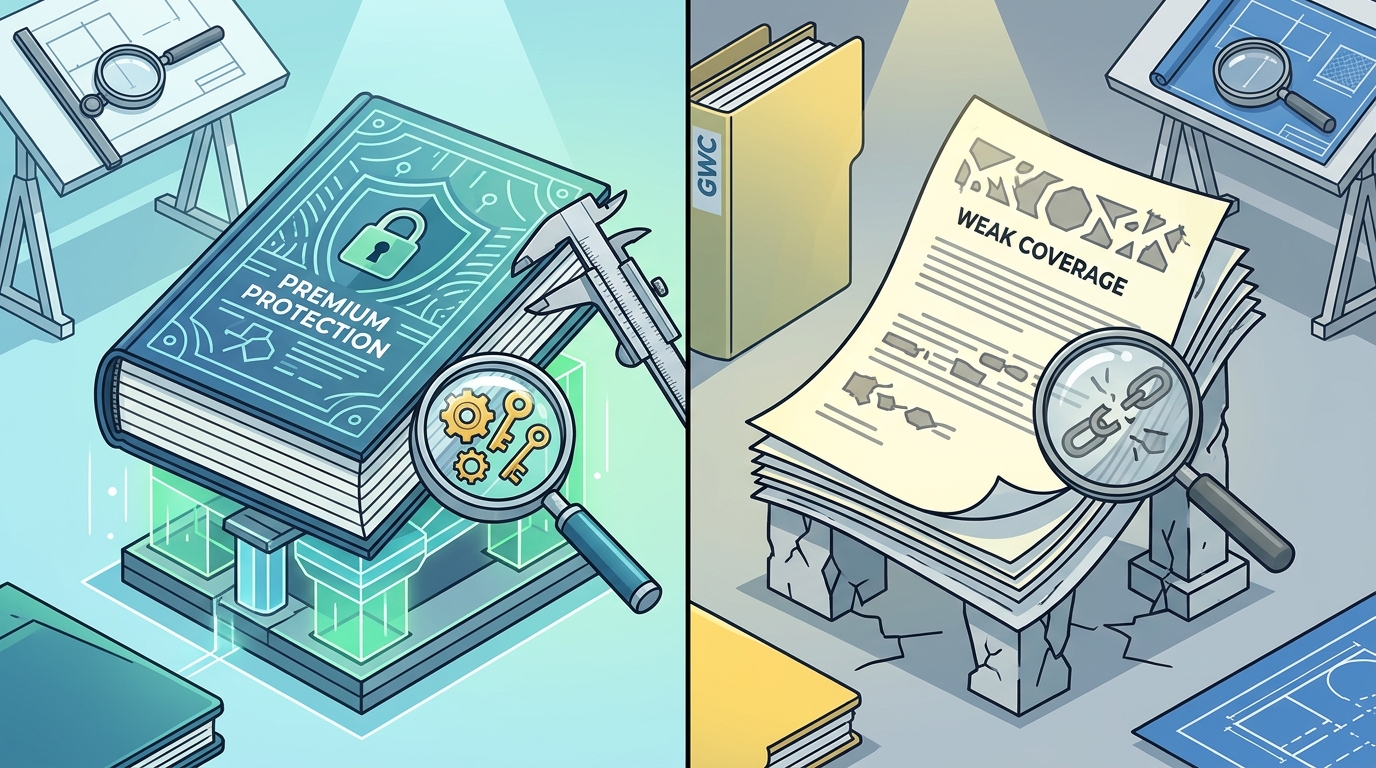
Choosing between a robust protection policy and a weak one often comes down to specific contractual details rather than the brand name on the cover. Generational Wealth Concepts helps individuals and business owners evaluate these critical distinctions to ensure their coverage actually performs when they need it most. Understanding these differences is among the first step toward building a reliable financial safety net.
1. Definition of Total Disability
High-quality policies use an own-occupation definition, while poor ones rely on any-occupation. In disability insurance, the definition of total disability is the single most important factor in determining whether you will receive benefits. A high-quality policy typically defines total disability as the inability to perform the duties of your specific profession, known as an own-occupation definition. Poor quality policies often use an any-occupation definition, which only pays if you cannot perform any job at all, regardless of your training or experience. For a small business owner or specialized professional, this distinction can mean the difference between receiving full benefits and receiving nothing.
2. Benefit Period and Duration
3. Long-Term Care Trigger Criteria
Quality LTC policies trigger benefits based on functional impairment, not just medical diagnosis. Long-term care insurance is a type of coverage designed to pay for services when you can no longer perform basic activities of daily living. A high-quality policy defines the trigger for benefits based on the inability to perform a specific number of activities of daily living, such as bathing, dressing, or eating. Poor quality policies may rely on vague medical criteria or require a higher threshold of impairment to activate benefits. This functional definition ensures that you receive support when you actually need help, rather than waiting until a severe medical event occurs.
4. Inflation Protection and Cost of Living Adjusters
5. Carrier Financial Strength and Stability
Top-tier policies are issued by carriers with strong financial ratings, ensuring long-term solvency. The ability of an insurance company to pay claims decades into the future is a measure of its financial health. High-quality policies are issued by carriers with strong financial strength ratings from recognized agencies, indicating a high likelihood of solvency. Poor quality policies may come from carriers with weaker ratings or a history of financial instability. Since disability and long-term care policies are long-term contracts, the financial stability of the issuer is just as important as the policy terms themselves.
6. Exclusions and Pre-Existing Condition Waivers
Quality policies have fewer exclusions and clear pre-existing condition definitions. Exclusions are specific conditions or activities that a policy will not cover. A high-quality policy has a limited and clearly defined list of exclusions, with transparent rules regarding pre-existing conditions. Poor quality policies may contain broad exclusions or ambiguous language that allows the carrier to deny claims for conditions that were not explicitly listed. Reviewing the exclusions section carefully is vital to ensure that your specific health history and occupation are not inadvertently excluded from coverage.
7. Claim Payment Process and Customer Service
Reputable carriers have streamlined claim processes and responsive customer support. The experience of filing a claim is a critical test of your policy's quality. High-quality carriers have well-documented claim processes, dedicated case managers, and responsive customer service teams. Poor quality carriers may have complex, opaque claim processes that lead to delays or denials. Researching the carrier's reputation for claim payment and customer satisfaction can provide valuable insights into how the policy will perform when you need it most. according to Long term care
Choosing the Right Policy
When evaluating disability and long-term care policies, prioritize the definition of disability, benefit duration, and carrier financial strength. These three factors form the foundation of a reliable protection strategy. By focusing on these core elements, you can avoid the pitfalls of low-quality coverage and secure a policy that truly supports your long-term financial goals.
Frequently Asked Questions
What is the difference between own-occupation and any-occupation disability definitions?
Own-occupation definitions pay benefits if you cannot perform your specific job, while any-occupation definitions only pay if you cannot perform any job at all. Own-occupation is generally considered higher quality for specialized professionals.
How long should disability benefits last?
Benefits should ideally last until age 65 to align with standard retirement age. This ensures you have income support until you can transition to retirement savings or other income sources.
What triggers long-term care insurance benefits?
Benefits are typically triggered when you cannot perform a certain number of activities of daily living, such as bathing or dressing. This functional impairment standard is more reliable than medical diagnosis alone.
Why is carrier financial strength important?
Financial strength ratings indicate the likelihood that an insurance company will be able to pay claims in the future. Since these policies are long-term, a strong carrier ensures your benefits will be available when needed.
Do I need both disability and long-term care insurance?
Many individuals benefit from both, as they cover different scenarios. Disability insurance protects income if you cannot work, while long-term care insurance covers the cost of care if you need assistance with daily activities.
Next Steps
Generational Wealth Concepts can help you review your current coverage and identify gaps in your protection strategy. To schedule a consultation, .