

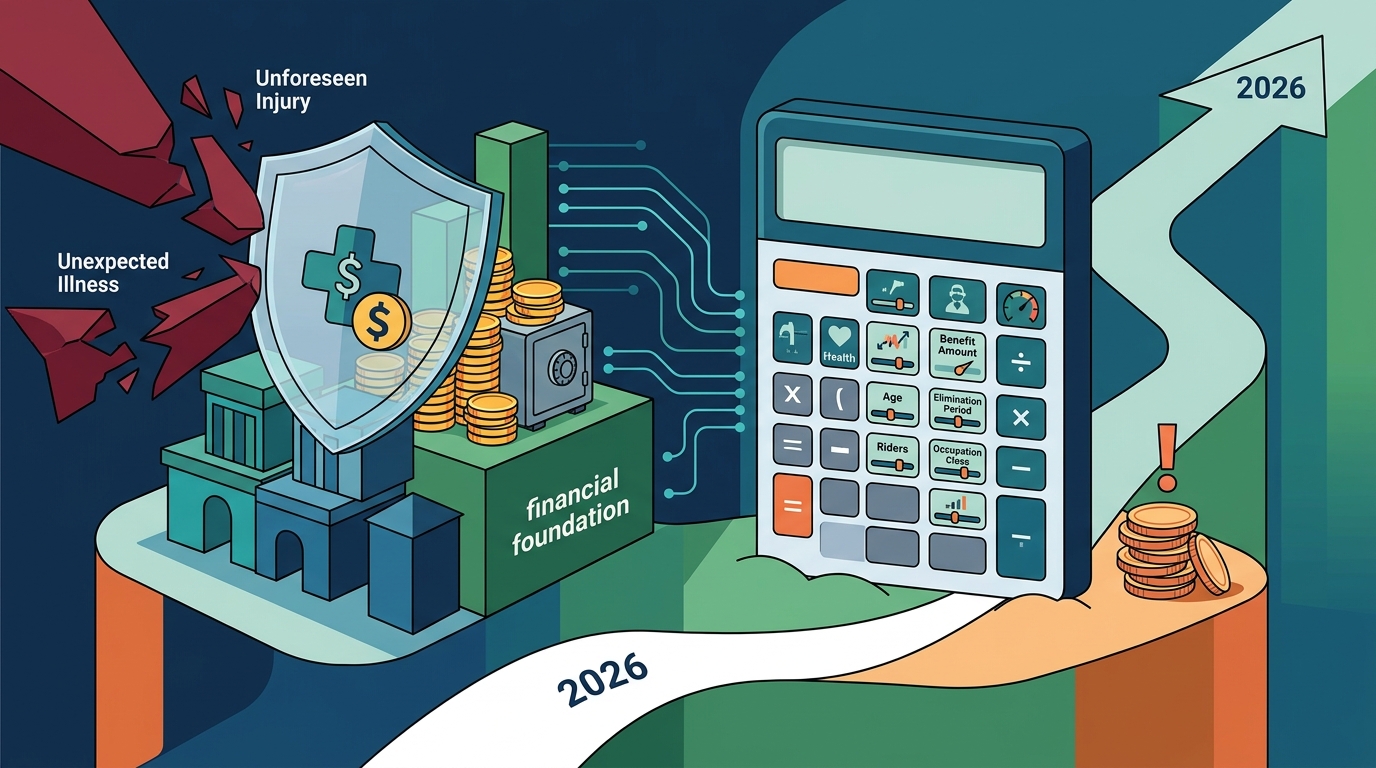
Financial security is fragile. One unexpected injury or illness can derail a career and drain savings in months. The average American has less than $1,000 in emergency savings, making income protection not just a luxury but a necessity for financial survival. Understanding the true cost of disability income protection is the first step toward building a resilient financial foundation. This guide breaks down the pricing models, coverage options, and strategic frameworks used by professionals to secure their livelihoods.
Why Cost Analysis Matters
Many professionals delay disability insurance because they perceive it as an unaffordable expense. However, the cost of being unprotected is exponentially higher. Disability income protection is designed to replace a portion of your earned income if you cannot work due to illness or injury. Without this coverage, you risk depleting retirement assets, accumulating high-interest debt, or facing long-term financial instability.
At Generational Wealth Concepts, we help individuals and business owners understand that disability insurance is an investment in your greatest asset: your ability to earn. By analyzing the specific costs associated with different coverage levels, you can make informed decisions that align with your budget and long-term wealth goals.
Types of Protection and Pricing
Disability income protection is not a one-size-fits-all product. The cost varies significantly based on the type of policy, the length of the benefit period, and the elimination period. Understanding these variables is crucial for accurate budgeting.
Own-Occupation Policies
Own-occupation policies are the gold standard for professionals such as doctors, lawyers, and dentists. These policies pay benefits if you are unable to perform the specific duties of your profession, even if you can work in another field. Because of the high level of protection, premiums are higher. However, the peace of mind is unmatched for high-income earners.
Any-Occupation Policies
Any-occupation policies pay benefits only if you are unable to work in any occupation for which you are reasonably suited. These policies are more affordable but offer less comprehensive protection. They are often suitable for individuals with transferable skills or those in the early stages of their careers.
Short-Term vs. Long-Term Disability
Short-term disability covers a brief period, typically three to six months. It is often provided by employers and is relatively low-cost. Long-term disability, on the other hand, can provide benefits for years or until retirement age. The cost of long-term disability is higher, but it protects against catastrophic financial events that could last for decades.
Key Factors Influencing Premiums
Several factors determine the cost of your disability income protection. Understanding these can help you shop for the best value.
Age and Gender
Younger individuals typically pay lower premiums because the risk of disability is lower. Gender also plays a role, with women often paying slightly more due to longer life expectancies and higher claims frequency for certain conditions.
Occupation and Industry
Your job title and industry are critical pricing factors. High-risk professions, such as construction or healthcare, face higher premiums due to the increased likelihood of injury or illness. Conversely, low-risk office jobs may qualify for lower rates.
Benefit Amount and Period
The amount of income you wish to replace and the duration of the benefit period directly impact the cost. A higher benefit amount and a longer benefit period will result in higher premiums. It is essential to balance adequate coverage with affordability.
Elimination Period
The elimination period is the waiting time before benefits begin. A longer elimination period, such as 90 days instead of 30 days, can significantly reduce your premium. This is because you are assuming more risk during the initial period of disability.
Coverage Options Compared
Choosing the right disability income protection requires comparing different options. The table below outlines the key differences between common coverage types.
| Policy Type | Coverage Scope | Typical Cost Range | Best For |
|---|---|---|---|
| Own-Occupation | Cannot perform own job | Higher Premium | Specialized Professionals |
| Any-Occupation | Cannot perform any job | Lower Premium | General Professionals |
| Short-Term | 3-6 Months | Low Cost | Emergency Cash Flow |
| Long-Term | Years to Retirement | Moderate to High | Catastrophic Protection |
For a detailed comparison of how these policies fit into a broader financial strategy, explore our financial education blog for insights on integrating disability insurance with retirement planning.
Key Takeaways
- Cost is Relative: The price of disability insurance is an investment in your earning capacity, not just an expense.
- Own-Occupation is Critical: For specialized professionals, own-occupation coverage is essential to protect your specific income stream.
- Elimination Periods Save Money: Opting for a longer elimination period can significantly lower your monthly premium.
- Early Purchase is Cheaper: Buying disability insurance at a younger age locks in lower rates and insures against future health issues.
- Group vs. Individual: Employer-provided coverage is often insufficient and non-portable. Individual policies offer greater control and security.
- Customization is Key: Tailor your benefit amount and period to your specific financial obligations and lifestyle needs.
- Professional Guidance: Working with a specialist ensures you get the best coverage at the most competitive rate.
Frequently Asked Questions
How much does disability income protection cost?
The cost varies based on age, occupation, and coverage amount. On average, individuals may pay between 1% and 3% of their annual income for comprehensive long-term disability coverage.
Is disability insurance tax-deductible?
If you pay premiums with after-tax dollars, benefits are typically tax-free. If your employer pays the premiums, benefits may be taxable. Consult a tax professional for your specific situation.
What is the difference between short-term and long-term disability?
Short-term disability covers a brief period, usually three to six months, while long-term disability can provide benefits for years or until retirement age.
Can I get disability insurance if I have a pre-existing condition?
Yes, but it may be more expensive or come with exclusions. It is important to disclose all medical history when applying for coverage.
How does privatized banking relate to disability insurance?
Disability insurance protects your income, which is the foundation of your ability to fund other financial strategies, including privatized banking. Protecting your cash flow ensures you can continue to build wealth even during periods of disability.
What is an elimination period?
An elimination period is the waiting time before benefits begin. A longer elimination period lowers your premium but requires you to have savings to cover the initial period of disability.
Do I need disability insurance if I have savings?
Yes. Savings can be depleted quickly during a long-term disability. Disability insurance provides a steady income stream, preserving your savings for other goals.
Secure Your Financial Future
Disability income protection is a critical component of any robust financial plan. At Generational Wealth Concepts, we specialize in helping families and professionals build financially independent lifestyles. Our team, led by Daniel Soto, provides expert guidance on life insurance, retirement planning, and disability income protection.
Do not wait until it is too late. Schedule a FREE Strategy Session today to discuss your needs and explore how we can help you secure your financial future. Contact us at (877) 323-8432 ext 800 or visit our contact page to get started.