
What Makes Disability and Long-Term Care Coverage Actually Work for Business Owners?
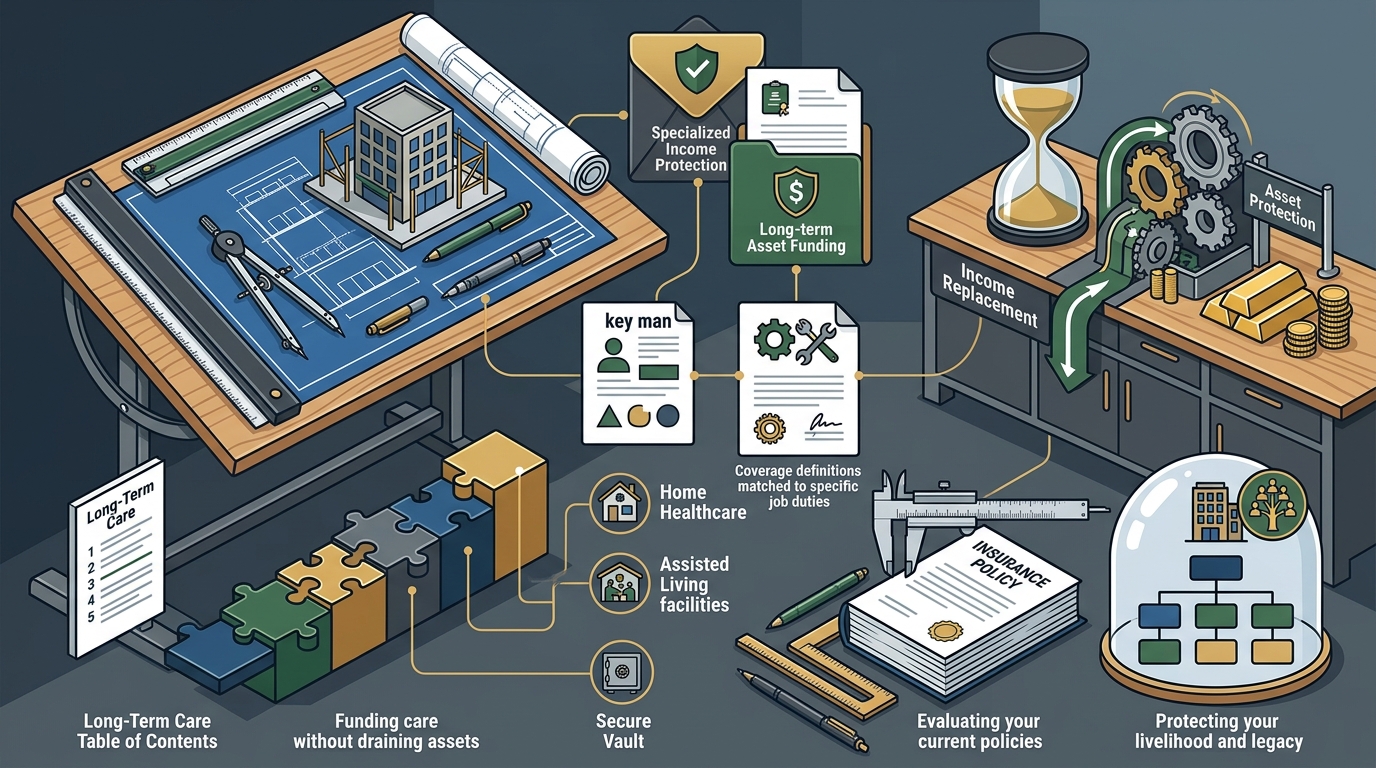
Disability and long-term care coverage works for business owners when the policy definitions match the specific risks of running a company. A good plan replaces income if you cannot perform your specific job duties and funds care without draining business assets. Generational Wealth Concepts helps owners evaluate whether their current policies actually protect their livelihood and legacy. according to Long term care
Defining Own-Occupation Coverage
Own-occupation coverage is a policy feature that pays benefits if you cannot perform the specific duties of your own profession, even if you could work in a different job. For a business owner, this distinction is critical because a general disability definition might stop payments if you can do any type of work. This type of coverage ensures that your income replacement continues while you focus on recovering or managing your business from a different capacity.
Consider a chiropractor who suffers a back injury. A standard policy might deny claims if the doctor can still work in a desk job, but an own-occupation policy recognizes that the physical demands of their specific practice are no longer possible. This precision prevents a gap in income that could force the sale of a valuable practice. At Generational Wealth Concepts, we prioritize this definition for professionals and owners because it aligns with the reality of specialized work.
Protecting Business Continuity
Business continuity is the ability of a company to maintain operations during a crisis, such as the owner's disability or long-term care need. When an owner is incapacitated, the business often faces a dual threat: lost management expertise and lost personal income. Effective coverage addresses both by providing a personal income stream and, in some cases, key person insurance that protects the company itself.
For example, a small business owner who requires long-term care may need to step away from daily operations. Without a plan, this absence can lead to a decline in revenue or the need to sell the business at a discount. By integrating disability income with long-term care benefits, owners can ensure that the business remains stable while they receive the necessary support. This approach preserves the asset value and allows for a smoother transition if the owner decides to exit the business later. according to Small Business Health
Funding Long-Term Care Needs
Long-term care insurance is a policy designed to cover the costs of assistance with daily activities, such as bathing, dressing, and eating, if you become unable to perform them independently. Medicare does not provide long-term care coverage or custodial care unless medical care is needed, as noted by Medicare. This gap means that business owners must plan for these expenses separately to avoid depleting their retirement savings or business assets.
Hybrid policies that combine life insurance with long-term care riders offer a flexible way to fund these needs. These products allow owners to use policy cash value to pay for care if needed, while still providing a death benefit to their heirs if care is not required. This dual-purpose approach provides peace of mind, knowing that a care need will not wipe out their legacy. We help clients evaluate whether a hybrid strategy or a standalone long-term care policy better fits their financial goals.
Evaluating Policy Fit and Flexibility
Policy flexibility is the ability to adjust benefits, riders, or premium payments as your life and business circumstances change. A rigid policy may not serve you well if your business grows, if you take on new roles, or if your family situation changes. Look for features like inflation protection, which increases benefits over time to keep up with rising care costs, and return-of-premium options that refund premiums if you never use the policy.
For instance, an owner who starts a new venture may need to increase their coverage to reflect higher income and greater responsibility. A flexible policy allows for these adjustments without the need to apply for a new policy and undergo new underwriting. This adaptability ensures that your protection evolves alongside your business. We review existing policies to identify gaps and suggest modifications that enhance coverage without unnecessary cost.
Coordinating with Estate and Tax Goals
Strategic coordination is the process of aligning insurance policies with your broader estate and tax planning goals. Disability and long-term care benefits can have tax implications, and the structure of your policy can affect how assets are transferred to your heirs. For example, benefits received for disability are often tax-free, but the funding source and policy ownership can influence estate tax exposure.
By working with qualified professionals, owners can ensure that their insurance strategy supports their legacy goals. This might involve using life insurance to provide liquidity for estate taxes or to equalize inheritances among children. Generational Wealth Concepts coordinates with independent licensed professionals who provide tax, legal, and estate-planning services to ensure that all parts of your plan work together seamlessly. This holistic approach maximizes the value of your insurance investments and protects your family's financial future.
Key Takeaways
- Own-occupation coverage is essential for business owners to ensure income replacement if they cannot perform their specific job duties.
- Business continuity planning involves protecting both personal income and the company's operations during a disability or care need.
- Long-term care insurance is necessary because Medicare does not cover custodial care, leaving a significant funding gap.
- Hybrid policies offer flexibility by combining life insurance with long-term care benefits, preserving legacy while funding care.
- Policy flexibility, including inflation protection and adjustable benefits, ensures that coverage remains relevant as circumstances change.
- Strategic coordination with estate and tax planning maximizes the value of insurance and supports legacy goals.
Frequently Asked Questions
What is the difference between short-term and long-term disability insurance for business owners?
Short-term disability insurance replaces a portion of your income for a limited period, typically three to six months, after a disability occurs. Long-term disability insurance provides income for a longer duration, potentially until retirement age, if you are unable to work due to a chronic illness or serious injury. Business owners often need both to cover the initial gap and the long-term risk.
Can I use my business assets to pay for long-term care?
Yes, but doing so can deplete the value of your business and reduce your retirement income. Long-term care insurance or hybrid policies are designed to fund care expenses without requiring you to sell or liquidate business assets. This preserves the value of your company for your heirs or for a future sale.
How does own-occupation coverage work for a business owner who has multiple roles?
Own-occupation coverage typically pays if you cannot perform the specific duties of your primary profession. If you have multiple roles, the policy definition will specify which duties are covered. It is important to review the policy language to ensure that it aligns with your actual job responsibilities and business functions.
Are disability benefits taxable for business owners?
Disability benefits are generally tax-free if you paid the premiums with after-tax dollars. However, if your business pays the premiums and deducts them as a business expense, the benefits may be taxable as income. It is important to consult with a tax professional to understand the implications for your specific situation.
What is a hybrid long-term care policy?
A hybrid long-term care policy is a life insurance policy that includes a rider allowing you to use the death benefit or cash value to pay for long-term care expenses. If you do not need care, the death benefit is paid to your beneficiaries. This type of policy provides flexibility and can help preserve your legacy while funding care needs.
How can I determine if my current policy is a good fit?
Review the policy definitions, particularly the definition of disability and the long-term care triggers. Check for features like inflation protection, own-occupation coverage, and flexibility to adjust benefits. If you are unsure, consider a policy review with a professional who can evaluate whether your current coverage meets your current needs and goals.
Next Steps for Business Owners
Protecting your income and legacy requires a tailored approach that considers the unique risks of business ownership. By understanding the definitions, benefits, and flexibility of disability and long-term care coverage, you can make informed decisions that support your long-term goals. Generational Wealth Concepts is here to help you navigate these options and design a strategy that works for you. Schedule a conversation to review your current coverage and identify areas that may deserve attention.